Walk down Colcord Avenue in Sanger Heights on a summer evening and you pass more history than square footage. Streetcar-era bungalows sit under mature oaks, a few brick Tudors lean into their hundredth year, and the porches are the kind builders stopped bothering with decades ago. Baylor museum studies chair Kenneth Hafertepe spent years cataloging these houses for his book on Waco's historic homes, and he still describes the street the way longtime residents do, recalling when the streetcar ran its length and "it'd be downtown in a jiffy." Buy one of these houses today and you're not just buying the porch and the pecan tree. You're buying a foundation that has been shifting, seasonally, by design of the ground it sits on, since before your grandparents were born. That fact shows up on page four of your inspection report, and it's the point where a lot of buyers panic for the wrong reason.
The Word That Scares Buyers Who Moved Here From Somewhere Else
If you're coming to Waco from a part of the country with stable soil, the phrase "foundation movement" on an inspection report reads like a five-alarm fire. Here it's closer to a weather report. Central Texas sits on a band of expansive clay, part of the Blackland Prairie's Houston Black series, that swells when it rains and shrinks when the ground dries out every summer. That cycle repeats every year, on every foundation in the region, whether the house was built in 1910 or 2010.
Local foundation repair company The Foundation Doctor, run out of Waco by Ronnie Wiethorn, lists the symptoms they see most often on Waco homes: stair-step cracks in brick or limestone, doors and windows that stick, diagonal drywall cracks spreading from door and window corners, and floors that slope or bounce slightly underfoot. Those symptoms often get worse in a dry August and ease up after a wet winter, because the clay underneath is doing exactly what clay does.
The useful skill isn't avoiding a house with any of these signs. It's telling the difference between normal seasonal handwriting and an actual structural problem. Inspectors generally use a simple test: run a fingernail across a crack. If one side sits higher or further out than the other, that's displacement, and it belongs on a structural engineer's desk. If the crack is a straight hairline under about a quarter inch with both sides level, it's usually in the monitor-but-don't-panic category. That distinction matters more in a hundred-year-old Sanger Heights bungalow than almost anywhere else in your search, because nearly every one of them will show you a crack somewhere.
Why the Age of the House Changes the Whole Conversation
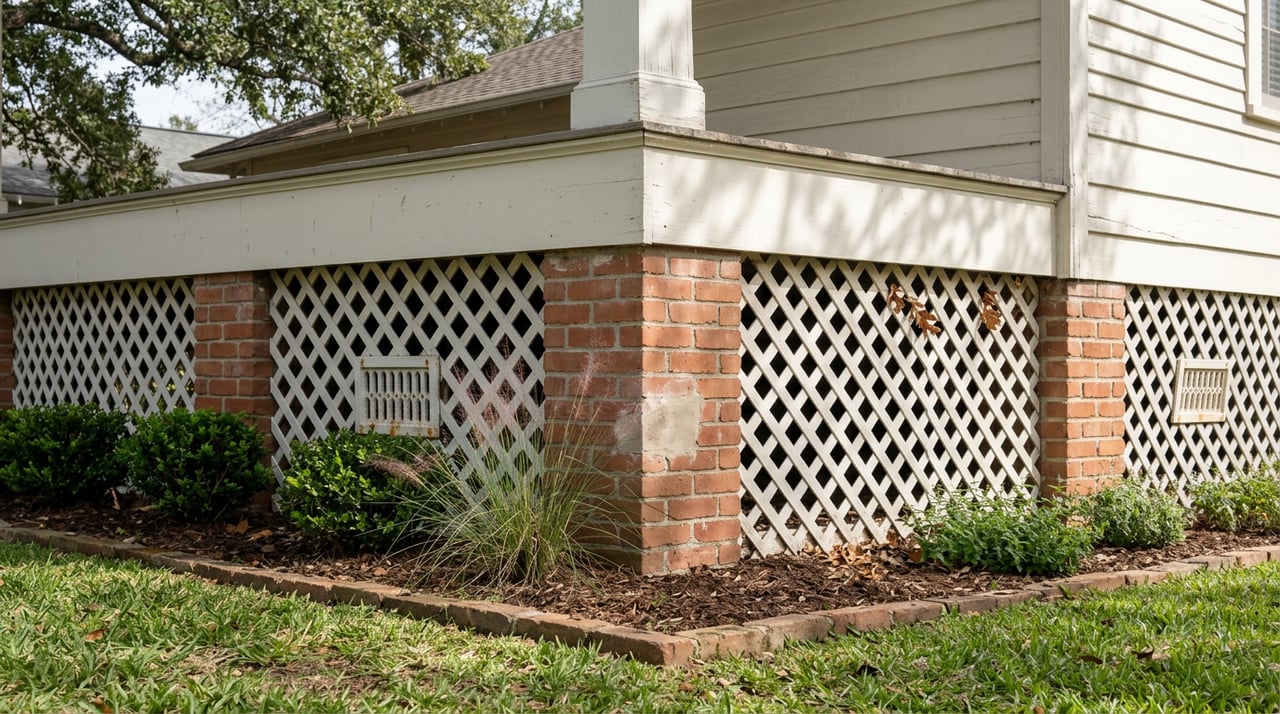
Here's the part most inspection guides skip, and it's the reason a foundation note on an older Waco home isn't the same conversation as a foundation note on a ten-year-old subdivision house. Newer construction across Central Texas is almost universally built on a concrete slab. The homes going up in Sanger Heights, Castle Heights, and Provident Heights a century ago were not. Older homes in historic Waco neighborhoods, along with rural acreage properties, commonly sit on pier-and-beam foundations rather than slabs, and that single structural difference changes almost everything about what a repair actually involves.
| Pier-and-Beam (common in pre-1940s Waco homes) | Slab-on-Grade (common in newer construction) | |
|---|---|---|
| How it moves | Individual piers shift independently as clay swells and shrinks beneath the crawl space | The entire slab rides on the soil as one connected surface |
| How it's typically fixed | Piers are shimmed, sistered, or replaced one at a time | Repairs usually mean pressed concrete or steel piers driven under the whole slab |
| What that means for buyers | A problem pier can often be addressed without touching the rest of the house | A localized issue can require lifting a much larger section of the home |
That's a meaningfully different repair story. A slab job that runs into the tens of thousands of dollars for a full stabilization is a different animal than shimming or replacing a handful of piers under a bungalow's crawl space. Buyers who assume a foundation flag on a Colcord Avenue Craftsman means the same dollar figure as a foundation flag on a five-year-old house in a west Waco subdivision are usually pricing the wrong repair entirely. It's worth asking your inspector directly which foundation type you're dealing with before you let a general foundation note set your negotiating position.
What the Seller Was Actually Required to Tell You
Texas Property Code Section 5.008 requires sellers of previously occupied single-family homes to complete a written disclosure notice before closing, and foundation condition is the most scrutinized line on that form. Sellers have to answer honestly about known cracks, past repairs, pier installations, leveling work, or any drainage systems installed specifically to manage foundation movement. If a seller had work done, the disclosure is supposed to name who did it, when, and whether the warranty transfers.
Two things trip people up here. First, marking a house "as-is" does not erase the disclosure requirement. The as-is language in the standard contract only affects whether the seller agrees to make repairs. It has nothing to do with whether they have to tell you what's wrong. Second, silence isn't automatically good news. Texas courts have consistently held that sellers can't claim ignorance of defects a reasonable homeowner would have noticed, and knowingly concealing a known issue exposes a seller to damages under the Texas Deceptive Trade Practices Act, including treble damages in serious cases.
Read that correctly and it flips the usual instinct. A disclosure that says "foundation repaired in 2016, transferable warranty, engineer's report available" is often the stronger house, not the riskier one. Someone already paid to diagnose the problem and stand behind the fix. A hundred-year-old home with a disclosure form that says no known issues across the board, with zero history noted anywhere, deserves a longer look at the crawl space, not automatic comfort.
The Clock You're Actually Racing
Texas gives buyers an option period, a negotiated window, most commonly seven to ten calendar days, during which you can terminate the contract for any reason in exchange for a small nonrefundable option fee, typically somewhere between $100 and $500. It's one of the more buyer-friendly features of Texas real estate, but it moves fast, and older homes eat that time faster than newer ones.
As of July 1, 2026, the standard TREC contract added a formal definition of legal holidays that affects how option fee delivery deadlines get counted, on top of the existing rule that weekends and holidays still count against your option period clock even though most offices are closed. That's a small procedural change, but it matters if your ten-day window happens to cross a long weekend, because the clock keeps running whether or not anyone is available to answer your call.
For a century-old home, here's a more realistic version of that week:
- Day 1 to 2: Schedule the general inspection immediately. Don't wait.
- Day 2 to 3: If the general inspector flags foundation movement, book a structural engineer or foundation specialist the same day. Central Texas foundation companies book up, and older homes are far more likely to trigger this second call than newer ones.
- Day 4 to 6: Review the specialist's findings, price out the actual scope, and decide whether you're negotiating a credit, requesting repairs, or walking.
- Day 7 and beyond: If your option period is only seven days, this is where buyers of newer homes often have room to spare and buyers of pier-and-beam homes often don't. Ask for the full ten days on anything built before 1950. It costs you nothing extra beyond the option fee itself and buys real breathing room for a second inspection.
Reading the Report Without the Drama
Visual inspection only captures a fraction of what's actually happening structurally. That's not a criticism of inspectors, it's just the nature of a walkthrough versus an elevation survey. A crack in the brick is a symptom you can see. A two-inch drop across a living room floor can feel almost level to someone walking through it and still show up clearly on a structural engineer's measurements. That's why doors that won't latch and windows that stick are often more reliable early signals than the cracks themselves, because they reflect actual frame movement rather than surface finish.
If you're buying in Sanger Heights, Castle Heights, or Provident Heights, expect the seasonal watering advice that comes with pier-and-beam and older slab homes alike: consistent moisture at the foundation perimeter during a dry Central Texas summer reduces the expand-and-contract cycle that does the most damage over time. If the seller's disclosure mentions a soaker hose routine or foundation watering system, that's evidence of someone maintaining the house correctly, not neglecting it.
A Short FAQ
Does a foundation note on the inspection mean I should walk away? Not by itself. Nearly every older home in Waco's historic core will show some foundation-related note because of the region's clay soil. The question is whether the report shows displaced, widening cracks and documented movement, or the ordinary seasonal cracking that comes with the territory.
What if the seller's disclosure says no known foundation issues but my inspector finds obvious cracks? That gap is worth a direct conversation before you move forward. It doesn't automatically mean bad faith, since some issues genuinely aren't visible to an owner who isn't looking for them, but it's a reason to request a specialist opinion before your option period closes.
Is pier-and-beam repair really less expensive than slab repair? It's often more contained, since individual piers can be shimmed or replaced without lifting an entire connected slab. Actual cost still depends on how many piers need attention and what's driving the movement, so get a written scope from a specialist rather than assuming.
How fast do I really need to move once something gets flagged? Faster than you'd think. A seven-day option period on a hundred-year-old home can disappear between scheduling a general inspector and getting a foundation specialist back out. Ask for ten days up front on anything built before 1950.
Old Waco homes come with real character and a real learning curve, and the difference between a smart buy and an expensive surprise usually comes down to knowing which foundation questions actually matter here. If you're weighing a listing in Sanger Heights, Castle Heights, or anywhere else in Waco's older neighborhoods, Katie Miller REAL has walked this exact conversation with buyers before. Contact Our WestLand Experts before your option period starts the clock.
