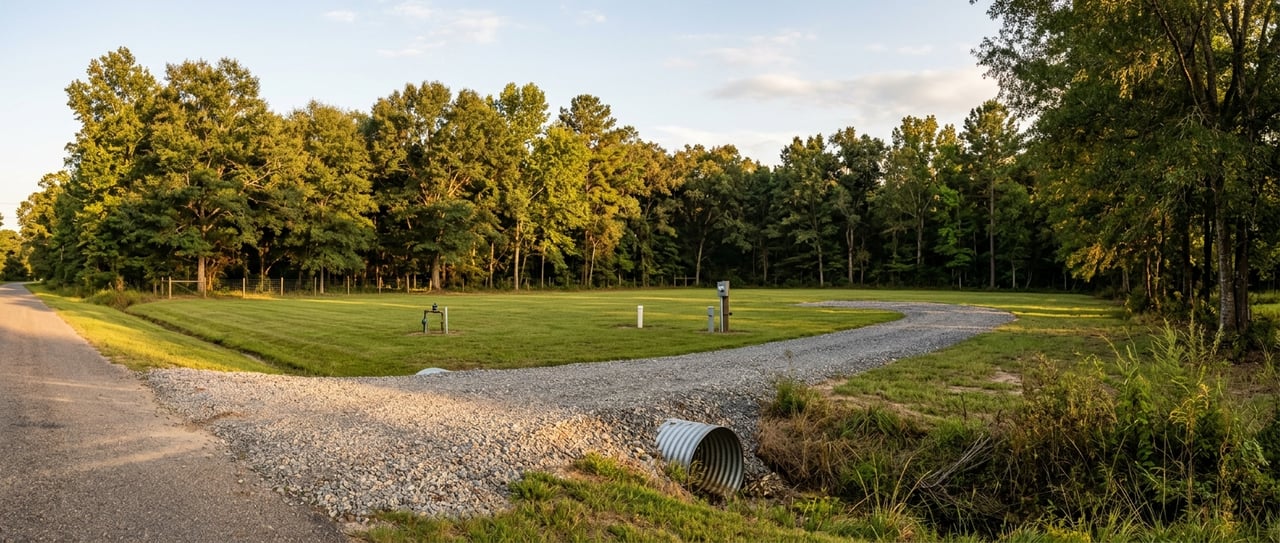
Thinking about turning a piece of raw land in China Spring into the home you have pictured for years? It is an exciting idea, but the biggest surprises usually happen long before the walls go up. If you want a smoother path from acreage to move-in day, it helps to understand what McLennan County expects, what the land itself can support, and where delays tend to happen. Let’s dive in.
Why building in China Spring is different
China Spring is an unincorporated community in northwestern McLennan County, about 12 miles northwest of Waco. That matters because your project will often be shaped more by county rules, septic and utility planning, access questions, and floodplain review than by a typical city-style subdivision process.
If you are buying raw land here, the lot itself is only part of the story. You also need to know how the property is accessed, whether utilities are available, and what approvals may be required before construction can really begin.
Start with due diligence
Before you spend too much time on house plans, focus on the land. Early due diligence can help you avoid expensive changes later and give you a clearer picture of what is actually possible on the property.
Check the survey, title, and easements
A survey can reveal issues that affect where and how you build. According to the Texas Real Estate Research Center, surveys can identify easements, restrictive covenants, encroachments, flood zones, topography, and even mineral or drill-site concerns.
That means the “best” spot for a home may not be the most obvious one when you first walk the land. A tract that looks wide open could still have utility easements, drainage limitations, or setbacks that shape your final site plan.
Confirm floodplain status early
Floodplain review is a key step in McLennan County. The county allows development in a Special Flood Hazard Area if the project complies with floodplain rules, and the county’s permit process requires an elevation certificate within 10 business days after foundation construction is complete.
If any part of the property may be in a flood-prone area, you want to know that before finalizing your home placement. This can affect design, timing, paperwork, and construction costs.
Verify septic feasibility
Many raw-land homes in unincorporated areas rely on an on-site sewage facility, often called an OSSF or septic system. The Texas Commission on Environmental Quality says the site must be evaluated by a licensed site evaluator or professional engineer before an OSSF can be built.
McLennan County also requires permits for on-site systems within the county’s jurisdiction. Even if you are buying acreage, you should not assume septic approval is automatic.
Review well requirements if needed
If the tract will use a private well, check local groundwater rules before you move forward. The Texas Water Development Board notes that groundwater conservation districts can regulate well spacing and production, and McLennan County points landowners to Southern Trinity Groundwater Conservation District resources.
This is one of those details that can strongly affect your building plan. Water access is too important to leave to guesswork.
Know the plat status
If the land is part of a subdivision or is being divided, plat approval matters. McLennan County says final plat approval is required before lots can be conveyed, and preliminary plat approval does not authorize construction.
That can be a major timing issue for buyers. If a tract is not fully ready from a platting standpoint, your build timeline may need to wait.
Utilities and access can drive the timeline
Many buyers assume the builder’s schedule will be the main factor. In reality, utilities and site access often shape the calendar first.
Water service is parcel-specific
In China Spring, water service is not something to assume based on a nearby property. Service is parcel-specific, and buyers need to confirm the actual provider, meter availability, and connection costs for the exact tract.
Cross Country Water Supply Corporation is an active PUC-regulated water utility headquartered in China Spring. That is a good reminder that water access can vary from one property to the next, even within the same general area.
Utility lines need coordination
If utility work affects county roads or rights-of-way, McLennan County has utility-line guidelines that apply. The county generally requires at least seven days’ notice before underground utility placement and allows the County Engineer to designate the line location.
That means utility installation is not always a quick call-and-go step. Coordination needs to happen early, especially if your homesite is set back from the road.
Driveways and culverts matter more than you think
Driveway access is not just about convenience. McLennan County has a culvert-order process for driveway drainage and notes that poor installations may need to be corrected at the owner’s expense.
If your property will use a private road, there is another detail to remember. McLennan County 911 must approve private-road names before road signs are ordered.
Shared driveways and private roads have limits
Shared access can sound simple on paper, but the rules matter. McLennan County allows shared access driveways only under specific requirements, and private streets are not county-maintained.
For buyers, this is a practical issue as much as a legal one. You want to understand maintenance responsibilities and access standards before committing to a tract.
What to expect during construction
Once the homesite is ready, county requirements still shape the process. In unincorporated McLennan County, new residential construction must follow the applicable International Residential Code.
The county says it does not have inspection authority or charge fees for these residential code requirements. Instead, the builder must notify the county, obtain three inspections during different phases of construction, and submit compliance notices.
This is why builder coordination matters from day one. Inspection timing can affect your overall schedule, especially if other pieces like floodplain compliance or utility work are also in motion.
Floodplain projects add another milestone
If the home is in a floodplain, you will have an added permit step. McLennan County’s floodplain permit process asks for site and elevation details, and the elevation certificate must be submitted within 10 business days after the foundation is completed.
That deadline is important. Missing a required document can create avoidable headaches when your project should be moving forward.
County right-of-way work requires follow-through
If your build involves utility crossings in a county right-of-way, McLennan County requires coordination with the County Engineer. The county also expects the utility owner to restore the road or ditch line to as good or better condition afterward.
This can affect both timing and budgeting. It is another reason raw-land construction works best when everyone is planning from the same checklist.
A practical build sequence for China Spring
Every property is different, but a simple milestone order can help you stay organized. On raw land, the front-end work often takes more time than buyers expect.
A smart order of operations
- Verify title, survey, and easements
- Confirm floodplain status
- Evaluate septic feasibility
- Review well requirements, if applicable
- Confirm plat status
- Choose your builder
- Finalize the site plan
- Secure water, utility, and driveway access
- Complete grading and foundation work
- Schedule required inspections
- Finish interiors and complete the final walkthrough
Following this order helps you solve land questions before construction dollars are committed. It also gives your builder a clearer path once the project is ready to move.
How long does a raw-land build take?
Custom homes often take longer than homes built for sale. The National Association of Home Builders reported that the average time to complete a single-family custom home was 10.1 months in 2023, compared with 8.9 months for homes built for sale.
In China Spring, a raw-land project may take longer than that average because of the up-front work involved. Survey review, septic evaluation, utility coordination, access planning, floodplain questions, and county-required steps all happen before the home is fully underway.
The exact timeline depends on the tract, the builder, and the complexity of the site. But the biggest lesson is simple: on land, preparation is part of construction.
What slows projects down most?
The most common friction points on raw land are usually not the finishes you choose inside the house. They are the site and infrastructure issues that must be handled first.
Common delays can include:
- Utility availability or meter timing
- Septic evaluation and permitting
- Floodplain review
- Driveway or culvert approvals
- Shared access questions
- Platting issues
- Inspection scheduling during construction
When you know these pressure points early, you can plan more confidently and ask better questions before you buy.
Why local guidance matters
Buying dirt and building a home are not the same transaction. In a place like China Spring, where county-level processes, utility details, and land characteristics matter so much, local guidance can help you spot issues before they become expensive problems.
That is especially true if you are comparing multiple tracts. One property may look similar to another at first glance, but the easier build site is often the one with fewer hidden hurdles.
If you are exploring land in China Spring and want a clear, practical plan for what comes next, WestLand Realty Group can help you evaluate the details that matter before you build.
FAQs
What should you verify before buying raw land in China Spring?
- You should verify the survey, title, easements, floodplain status, septic feasibility, well requirements if needed, utility access, and plat status before moving ahead.
Can you start building on land in McLennan County before final plat approval?
- No. McLennan County says preliminary plat approval does not authorize construction, and final plat approval is required before lots can be conveyed.
Do you need a septic permit for acreage in McLennan County?
- Yes, if the home will use an on-site sewage facility. McLennan County requires permits for OSSFs within its jurisdiction.
Will McLennan County maintain a private road for a China Spring homesite?
- No. The county says private streets are not intended for through traffic and are not county-maintained.
What usually delays a raw-land home build in China Spring?
- The most common issues are access, utilities, septic planning, floodplain questions, platting, and inspection scheduling.
