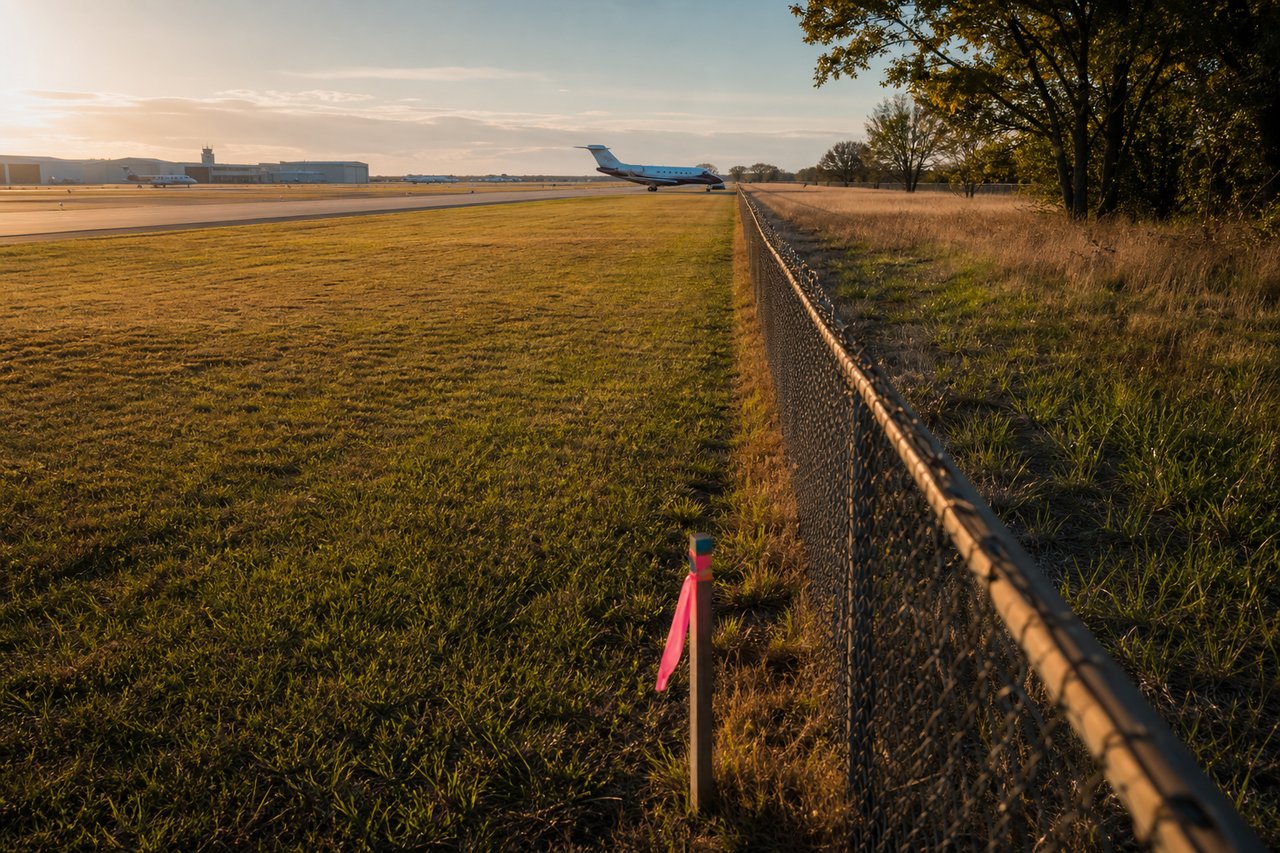
The City of Waco is pursuing master development of approximately 240 acres at Waco Regional Airport, with a developer-selection process underway as of September 2026. Buyers should weigh potential employment and business growth against real trade-offs like aircraft noise, flight paths, and zoning constraints before making decisions based on airport proximity alone.
What does the Waco airport development mean for buyers?
This post is for buyers seriously considering properties within 1-2 miles of the airport. If you're just curious about Waco development, this is probably more detail than you need. The City of Waco is actively seeking a master developer to plan approximately 240 acres at Waco Regional Airport. As of September 2026, the project is in a developer-selection stage, meaning no construction has started and no tenants have been announced. For buyers, that distinction matters: real opportunity exists here, but it is tied to a multi-year planning process, not an immediate price catalyst.
Key Takeaways
- The City of Waco issued solicitation RFP 2026-035 for a master developer to oversee roughly 240 acres at Waco Regional Airport, with proposals due September 15, 2026.
- The City's FY2026 budget includes $12 million for airport runway rehabilitation, 95% grant funded, signaling a serious, multi-year public investment in airport infrastructure.
- The most recent available market data, from HAR's August 2026 report, shows the Waco area at a median home price of $285,000, 851 active listings, and 67 days on market.
- Airport proximity can cut both ways for buyers: potential upside from employment and business growth, real downside from aircraft noise, flight-path restrictions, and land-use constraints.
- No source has confirmed approved tenants, final land uses, construction timelines, or projected job totals for the 240-acre site.
What is actually happening at Waco Regional Airport right now?
Here is the honest picture: the City of Waco has committed real money and real planning effort to Waco Regional Airport, but the 240-acre development is still in procurement, not construction.
On the infrastructure side, the City's FY2026 budget includes $12 million for runway rehabilitation at Waco Regional Airport, with 95% of that cost covered by federal grants. That is not speculative spending. It is a committed capital project designed to sustain both commercial airline service and general aviation operations at the airport located at 7909 Karl May Drive.
On the land-development side, the City issued solicitation RFP 2026-035 calling for a master developer to plan approximately 240 acres in alignment with airport operations and the airport's long-term economic vision. Proposals were due September 15, 2026. That means the City is just now evaluating who will lead the planning effort. Approved uses, tenants, construction timelines, and job projections are all still ahead.
It is also worth noting that the Texas Department of Transportation's Aviation Capital Improvement Program for 2026-2028 lists runway, electrical, and pavement work for TSTC Waco, which is a separate facility from Waco Regional Airport. If you see TxDOT aviation investment referenced in the news, confirm which airport it applies to before drawing conclusions about the Regional Airport's development.
The airport also recently completed an approximately $8.8 million modernization project, with nearly $8.3 million in Federal Aviation Administration funding. That project is finished, and it establishes a baseline of modern infrastructure that makes the 240-acre land development more credible as a long-term prospect.
What do current airport operations look like?
According to the City of Waco's annual report, Waco Regional Airport recorded 56,537 commercial and charter enplanements (up 4%) and 87,402 aircraft operations. The airport supports both scheduled passenger flights and general aviation, which is an important distinction for nearby buyers: general aviation generates different noise and traffic patterns than commercial airline service alone.
How should buyers think about properties near the airport?
I walk buyers through this kind of question all the time, and my honest answer is: airport proximity is not a simple positive or negative. It depends on the specific parcel, the buyer's priorities, and the timeline you are working with.
The potential upside
Airport-adjacent land development, when it matures, typically attracts employment, logistics, aviation-support services, hospitality, and light industrial uses. If the 240-acre site follows that pattern, the surrounding area could see increased business activity, more jobs in Greater Waco, and demand for housing from workers tied to those employers. I have written about how Waco job growth influences local home prices, and airport-driven employment fits that same pattern.
The broader context matters too. Waco is already seeing significant development pressure from multiple directions, including the I-35 corridor and downtown rezoning. You can read more about how those forces are shaping values in my post on I-35 expansion and real estate impact in Waco and Hillsboro. Airport development adds another layer to a market already in motion.
The real trade-offs
Airport proximity also comes with legitimate concerns that buyers should evaluate before making an offer:
- Aircraft noise: The airport handles both commercial and general aviation operations. Depending on a parcel's location relative to flight paths, noise exposure can be significant and will not decrease if operations grow.
- Land-use restrictions: Properties near airports are often subject to height restrictions, avigation easements, or compatible land-use requirements that limit what you can build or how you can use the property.
- Zoning and future use: The 240-acre development could bring commercial or industrial neighbors to areas that currently feel residential or rural. That is upside for some buyers and a deal-breaker for others.
- Timeline uncertainty: Airport-adjacent commercial projects routinely take five to ten years or longer from developer selection to occupancy. No approved plans, tenants, or groundbreaking dates exist yet for this site.
Every situation is different, and the only way to evaluate a specific property near the airport is to pull the parcel data, check the City of Waco's planning and zoning maps, and understand exactly where the flight paths run. That is the kind of due diligence I run with buyers before we make any decisions.
Where does the Waco market stand right now?
For context on the broader market, the most recent data available shows the Waco area with a median home price of $285,000, 851 active listings, and 67 days on market as of August 2026, according to HAR's August 2026 report. That inventory level and days-on-market figure suggest buyers have more room to negotiate than they did two years ago, which is worth knowing if you are evaluating a near-airport purchase as part of a longer investment thesis.
Metric | Waco Area (August 2026) |
|---|---|
Median Home Price | $285,000 |
Active Listings | 851 |
Days on Market | 67 |
Source: HAR, August 2026 market data. Figures are area-level and reflect the broader Waco market, not any specific neighborhood or proximity to the airport.
If you are looking at this from an investment angle, I also recommend reading my post on Baylor University and Waco real estate for investors in 2026 for a fuller picture of the demand drivers in this market.
Frequently Asked Questions
What exactly is being developed at Waco Regional Airport?
The City of Waco has issued a solicitation for a master developer to plan approximately 240 acres of land associated with Waco Regional Airport, with the goal of aligning development with airport operations and the airport's long-term economic vision. As of September 2026, the City is in the developer-selection stage, meaning specific land uses, tenants, and construction timelines have not yet been announced.
When will the 240 acres near Waco Regional Airport actually be developed?
A firm timeline has not been established. Master planning, environmental review, zoning approvals, and infrastructure work typically take several years after a developer is even selected. Treat this as a long-horizon project, not a near-term catalyst.
Will the new airport development increase home values in nearby Waco neighborhoods?
There is no guarantee. Airport-adjacent development can increase demand for nearby housing if it brings significant employment and business activity, but it can also suppress values for buyers who are sensitive to aircraft noise, increased truck traffic, or industrial neighbors. The current sources confirm the investment and the land-development solicitation, but no study has quantified a price premium or discount for specific Waco neighborhoods near the airport.
Could airport expansion increase aircraft noise or traffic near nearby homes?
Yes, it is a real possibility buyers should investigate. Waco Regional Airport currently supports both commercial passenger flights and general aviation operations, and any growth in activity would likely increase both noise and ground traffic in the surrounding area. Buyers should check the airport's current flight paths and ask the City of Waco's planning department about any compatible land-use or noise-exposure designations that apply to a specific parcel before making an offer.
How can buyers check whether a Waco property is near an airport flight path?
The City of Waco's Airport Business page is a starting point for contact information, and the FAA's aeronautical charts show official flight paths and approach corridors. For a specific parcel, I recommend contacting the City of Waco's planning and development services department directly to ask about any airport overlay zones, avigation easements, or compatible land-use restrictions that affect the property. Your closing agent can also flag recorded easements during the title search.
Is buying land or a home near Waco Regional Airport a good investment?
It depends on your timeline, risk tolerance, and the specific parcel. The confirmed public investment in airport infrastructure is real, and the 240-acre development solicitation signals the City's long-term intent. But the project is early-stage, and airport proximity carries trade-offs that vary significantly by location. Your specific situation deserves a property-level analysis, not a general answer. That is exactly the conversation I have with buyers before we start touring.
The confirmed public investment at Waco Regional Airport is meaningful, and the 240-acre development solicitation puts Greater Waco on a path that could reshape the northwest side of the market over the next decade. But buyers who make decisions based on headlines without understanding what is actually confirmed versus what is still speculative are taking on unnecessary risk.
The Waco market has enough genuine momentum, from the I-35 corridor to downtown rezoning to this airport solicitation, that buyers willing to do the homework can find real opportunity. If you're evaluating a specific property near the airport, schedule a consultation and I can walk you through the parcel data and flight-path overlay.
Equal Housing Opportunity. WestLand Realty Group is a team of Real Broker LLC, licensed by the Texas Real Estate Commission. This article is general information only and is not legal, tax, or financial advice. Confirm all figures and property-specific details with your closing agent, tax advisor, or lender. Texas Real Estate Commission Consumer Protection Notice | Texas Real Estate Commission Information About Brokerage Services.
